
Poison frogs such as Oophaga sylvatica obtain their skin alkaloids from the arthropods they eat. But do frogs that eat similar prey also carry similar toxins? And does DNA metabarcoding of stomach contents identify prey better than traditional identification under the microscope? To answer these questions, Arianna Tartara and co-authors sampled 23 adult O. sylvatica in an early-regeneration plot of the Reassembly chronosequence. The frogs carried 130 different alkaloids, 10 of them potentially new to science, and had eaten 280 prey taxa from 22 arthropod orders. Ants, flies, beetles and mites made up most of this diversity, a broader diet than the usual picture of poison frogs as ant and mite specialists. Interestingly, the most common prey was a mite that contains no alkaloids at all. Frogs with similar diets did not carry similar toxins, probably because a stomach sample reflects only recent meals, while alkaloids accumulate over a frog’s lifetime. The study also showed that, in the tropics, where DNA reference data for many arthropods are still scarce, metabarcoding works best when combined with microscope identification. Their results highlight why basic research in the tropics remains essential: new technologies can only reach their full potential when the underlying knowledge is available.
Tartara A., K. Neira-Salamea, A. Keller, M.O. Rödel, F. Frenzel, M. Heethoff, and R.A. Saporito. (2026). Disentangling chemical defence and prey composition of Oophaga sylvatica. Journal of Chemical Ecology. 52: 102.
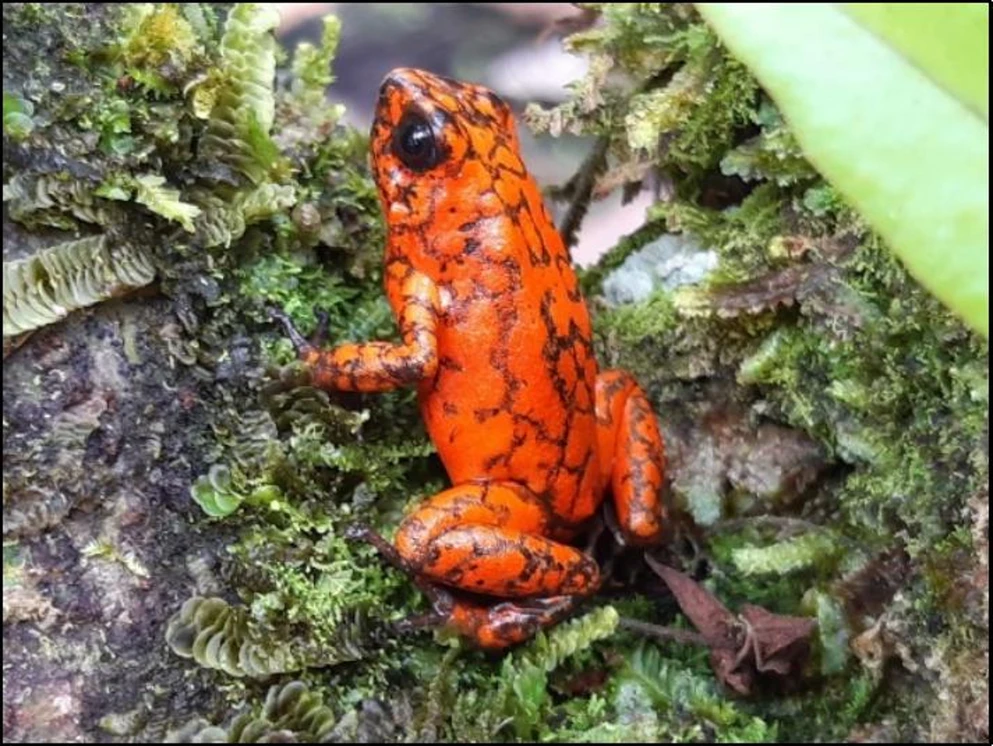
Adult Oophaga sylvatica on a Theobroma cacao tree; photograph courtesy of M. Rödel from the publication.