
Artificial “dummy” fruits are a very useful method to assess the recovery of potential interactions in restored forests. Most attacks on these dummy fruits are by birds (and some by arthropods or mammals), represented by fruit feeding bird species that are important seed dispersers. Pedro Luna and his team applied large and small dummy fruits to compare restoration strategies (assisted / natural) in Jocotoco’s Buenaventura Reserve. They showed that large fruits were handled more frequently than small fruits in restored areas compared to old-growth forests. Forest cover and elevation both contributed positively to these interactions, irrespective of restoration strategy. The results highlight the great potential of forest restoration to key ecosystem functions such as seed dispersal, which may further enhance the re-establishment of highly diverse forest ecosystems. The study was performed in the project UpScaleR, a spin-off project of “Reassembly”. The project compares assisted and natural regeneration in Buenaventura, funded by the Foundation UniScientia. The work by the small team is now published in the journal Biodiversity and Conservation.
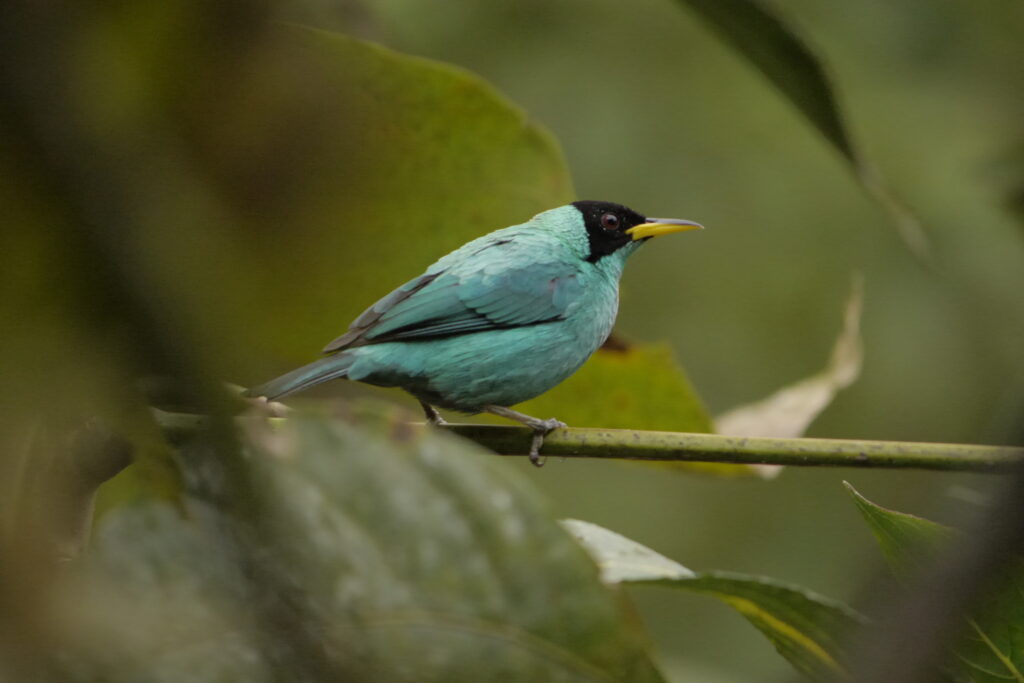
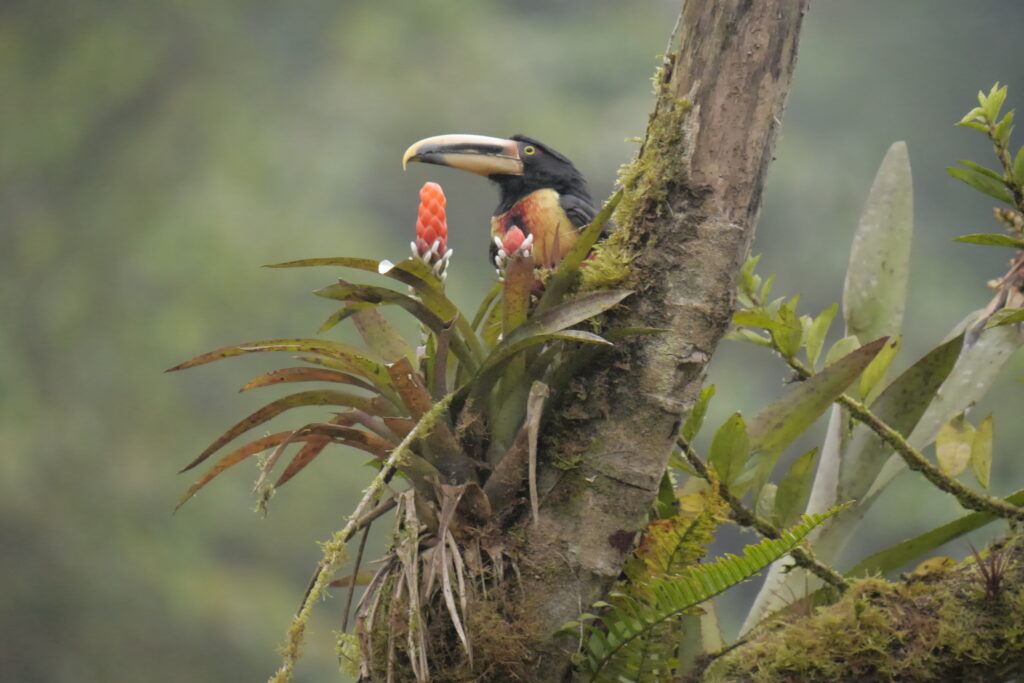
Fotos by Nico Blüthgen (iNaturalist)