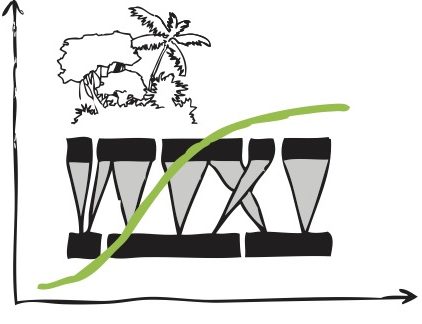

We had a P-REX in our first phase, and now we have the T-REX! For this new experiment, we have planted around 5,000 seedlings, all grown from seeds collected from trees around the area. They are arranged in 4–5 subblocks, each containing 3 seedlings of 16 tree species that grow at different stages of the chronosequence.
With this setup, we want to understand what determines whether a species establishes successfully: abiotic factors or biotic interactions. To find out, we will study different aspects of the species’ ecophysiology, as well as their interactions with different trophic levels. That’s why, in 10 of the 25 plots distributed across the chronosequence (only from pasture land-use legacy), we will set up a rainout shelter to study the effects of drought, a bird exclusion cage to look at top-down effects on these species, and an ant exclusion experiment.
We are excited to see the first results of this great effort, and we are grateful to our wonderful team, the Chocó Lab, in Canandé for all their work setting up these experiments!
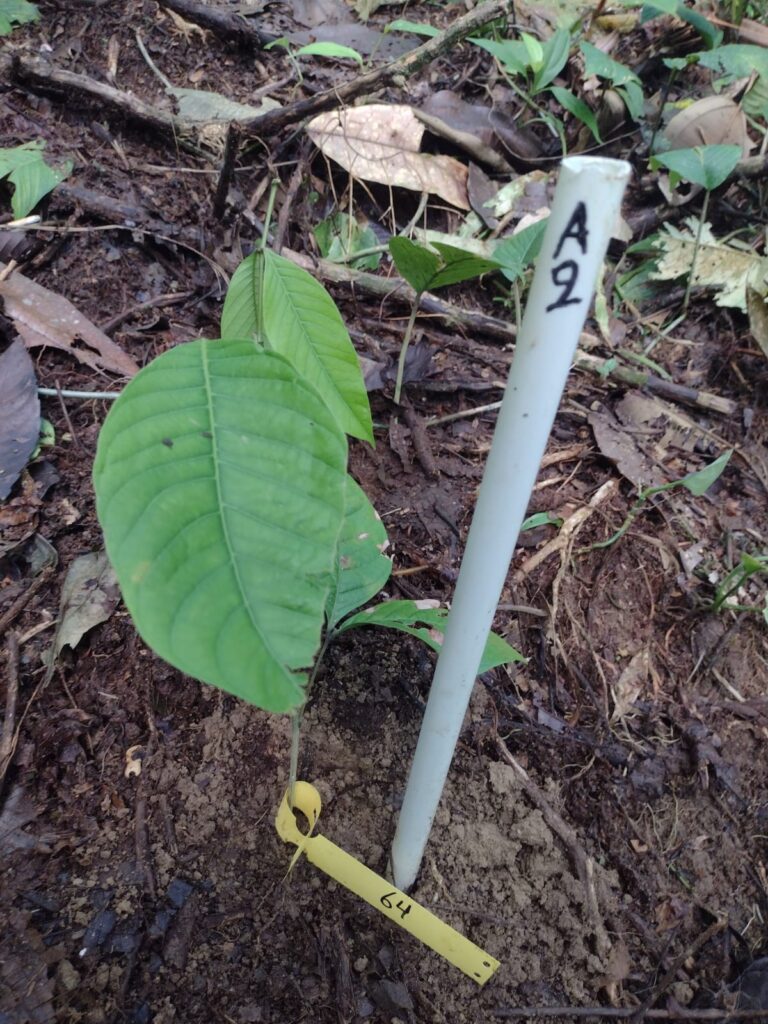
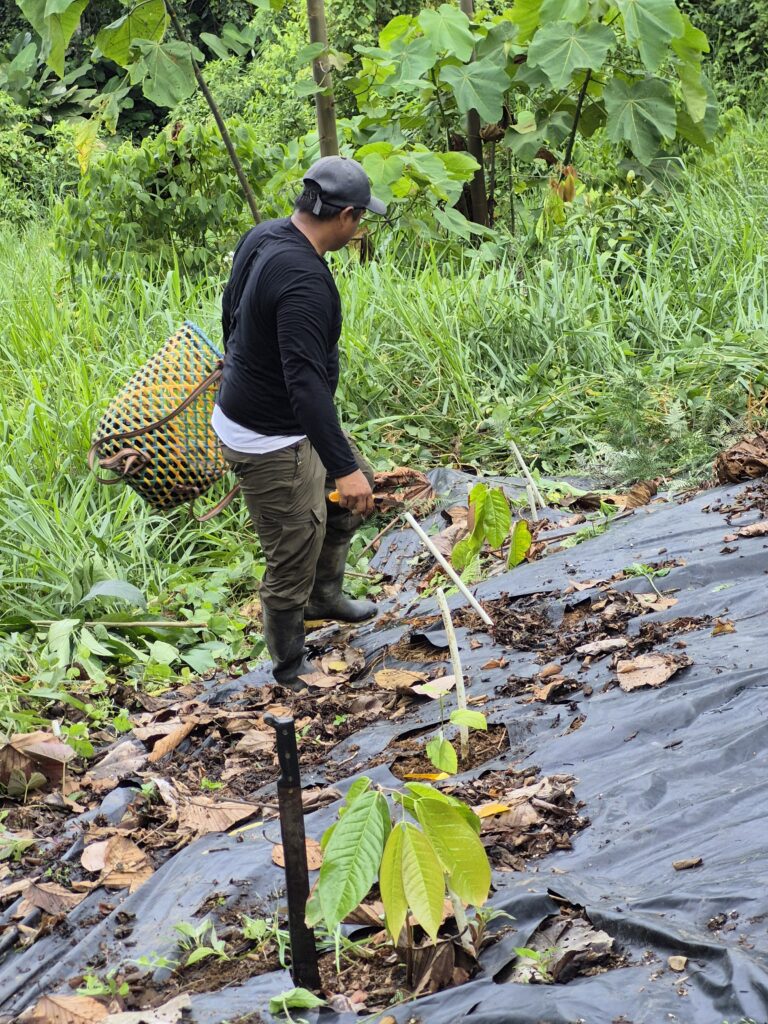
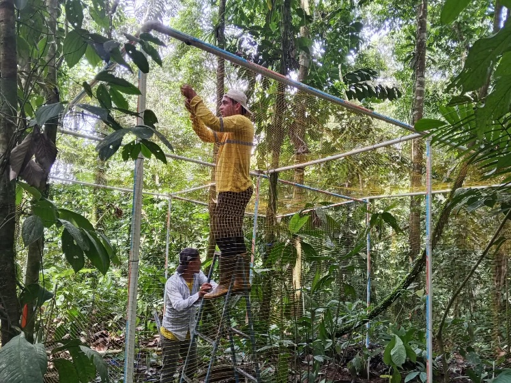
Pictures of the T-REX. Top left: a seedling planted in the experiment. Top right: planting a seedling in the experiment; the plastic was laid down for a year to reduce grass competition in the pastures. Bottom left: a rainout shelter installed in one of the late-regeneration plots. Bottom right: installing a bird exclusion cage in one of the late-regeneration plots.